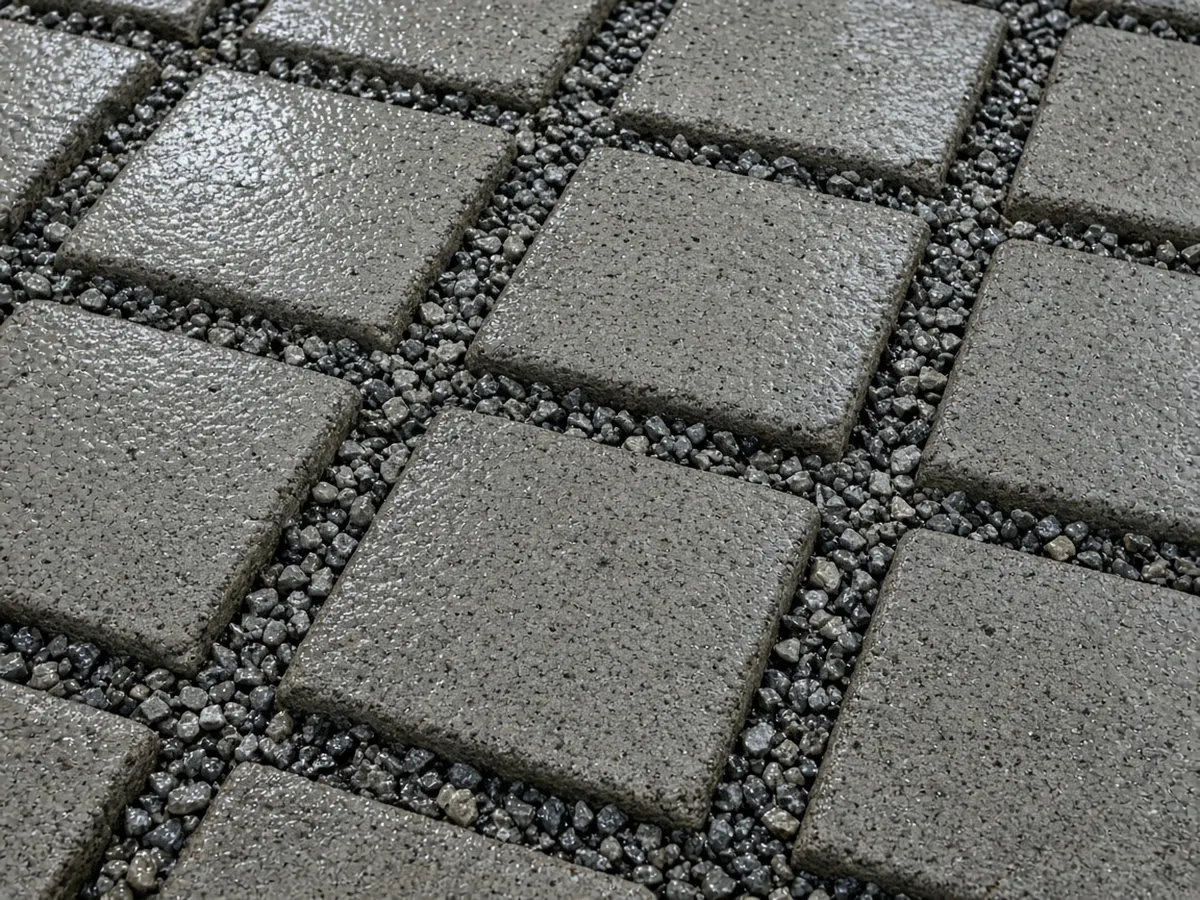
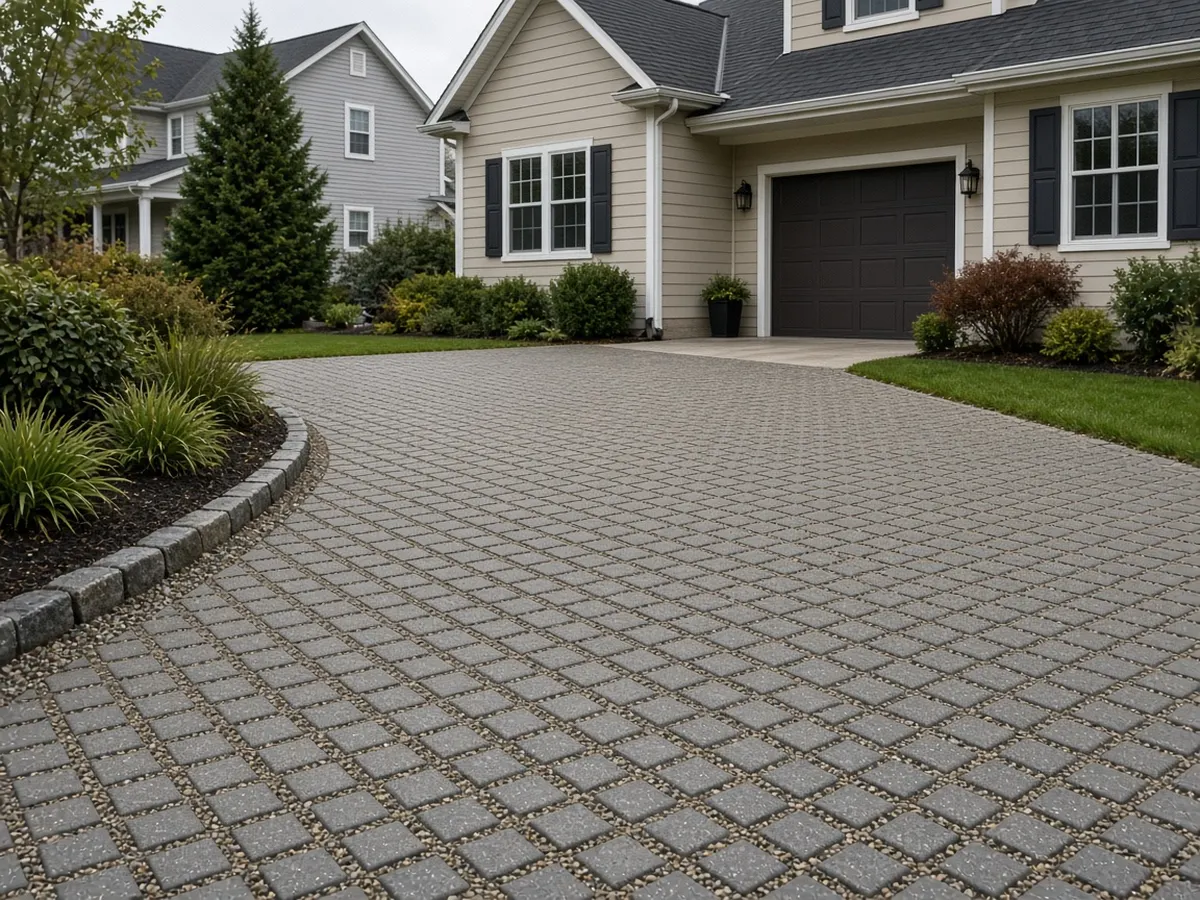
Permeable pavers let rain and snowmelt soak down through the surface instead of running off into the street, the storm drain or your basement. They look a lot like regular pavers, but with wider joints filled with small stone chips and a deep base of open, clean stone that stores water while it soaks into the ground or drains away. They are used on patios, walkways and driveways, and are increasingly popular in communities near lakes and rivers that care about stormwater.
This page explains how permeable systems work, the special challenge of clay soil, maintenance, winter care, published costs and what to ask. When you are ready, call or use the form and we will connect you with an independent local contractor.
How a Permeable System Works
A regular paver patio sheds water off its surface. A permeable system is built to let water in.
- Pavers with spacers that create wider joints.
- Joint aggregate, small angular stone chips (not sand), in the joints.
- Bedding layer of small clean stone, not sand.
- Open-graded base of larger clean crushed stone with no fine particles. The empty space between stones holds water.
- Subbase of larger stone on deeper systems.
- Geotextile or underdrain depending on soil conditions.
Water passes through the joints, collects in the stone reservoir, and either soaks into the soil below or drains out through a pipe slowly.
Permeable Pavers on Clay Soil
This is the key question in Chesterfield Township. The lake-plain clay common here drains very slowly. A permeable system built on clay can still work well, but it usually needs:
- An underdrain: a perforated pipe in the base that carries stored water slowly to a storm drain, ditch or daylight outlet.
- A deeper reservoir to hold water from big storms while it drains.
- Careful design so water does not sit against your foundation.
Without an underdrain, a permeable system on tight clay can stay saturated, which is bad for freeze-thaw durability. A contractor with permeable paver experience should evaluate your soil and drainage options.
Benefits
- Less runoff and puddling. Water goes into the surface instead of across it.
- Less ice from refreezing puddles in some conditions, because meltwater drains through.
- Stormwater benefits. Communities around Lake St. Clair and the Clinton River watershed deal with runoff and water quality issues; reducing runoff from your property helps.
- Possible credits. Some communities offer stormwater credits or allow permeable surfaces to count differently toward lot coverage limits. Check with your local government; do not assume a credit exists.
Drawbacks
- Higher cost than standard pavers because of deeper excavation and clean stone.
- Maintenance. Joints can clog with dirt, leaves and sand over time, reducing permeability.
- Not for every site. Areas that receive lots of sediment, such as next to bare soil or under heavy tree cover, clog faster.
- Wider joints can be less comfortable for high heels or small wheels.
Maintenance
Permeable pavers need a bit more attention than standard pavers.
- Sweep or blow off leaves and debris regularly, especially in fall.
- Vacuum sweeping every year or two can pull out fine dirt from joints. Some contractors offer this.
- Top up joint aggregate as needed. Never use regular sand or polymeric sand in permeable joints; it will seal the surface.
- Keep mulch and soil from washing onto the surface.
Winter Care
- Do not sand for traction. Sand clogs the joints. Use the paver manufacturer's guidance for deicers.
- Plow carefully with a raised blade or a rubber edge.
- Snow piles that melt and carry dirt can clog areas; pile snow on the lawn if possible.
Where Permeable Pavers Make Sense
- Driveways that create runoff toward the garage or the street.
- Patios in low areas where water collects.
- Homes near the lake, canals or drains where reducing runoff is a priority.
- Lots near impervious surface limits set by local zoning (confirm with your community).
Permeable Pavers vs. Other Drainage Fixes
Permeable pavers are not the only way to solve water problems, and sometimes they are not the best one. If water is pooling on an existing patio, the cause may be poor slope or a downspout, which can be fixed more cheaply. A French drain, a dry well, or a rain garden can handle runoff from roofs and lawns. Regular pavers with a drain line along the low edge can work well on many sites.
Permeable systems make the most sense when you are building new hardscape anyway, the area is large enough that runoff is a concern, and the site can be designed with an underdrain on clay. A good contractor will tell you if a simpler fix would do the job. Ask them to explain the options side by side, including how each one will perform in a Michigan winter.
What Permeable Pavers Cost
These are general national estimates, not quotes. HomeGuide's permeable pavers guide lists permeable pavers at roughly $10 to $30 per square foot installed. Angi's permeable pavers guide also discusses installed costs and factors. Expect permeable systems to cost more than standard pavers for the same area because of deeper excavation and specialty stone.
What moves the price:
- Excavation depth and soil removal.
- Underdrains and outlets.
- Paver product.
- Driveway vs. patio loads.
- Access and disposal.
Lakeshore Properties
Near Anchor Bay and the canals, the water table can sit close to the surface for part of the year. That limits how much water a permeable base can soak into the ground, so the design may rely more on storage and an underdrain outlet. A contractor familiar with lakeshore lots can advise.
Questions to Ask a Permeable Paver Contractor
- Have you installed permeable systems on clay soil?
- Will we need an underdrain, and where will it outlet?
- How deep will the stone reservoir be?
- What joint and bedding stone will you use?
- What maintenance will we need to do?
- Does our community offer any stormwater credit for this?
Get a Free Permeable Paver Quote
Tell us where you are thinking about permeable pavers, roughly how big the area is, any drainage problems you see now, and your city or zip code. A local contractor will follow up with a visit and a written quote. Call the number at the top of the page or use the form.