An in-ground pool in Michigan gets a short, intense season and then sits through a long winter. The deck around it has to handle wet bare feet and splashing chemicals all summer, then freeze-thaw cycles and snow for months. Pavers are a popular choice for pool decks because they offer good traction, they do not develop the long cracks that poured concrete decks often do, and individual pavers can be lifted for repairs or access to plumbing.
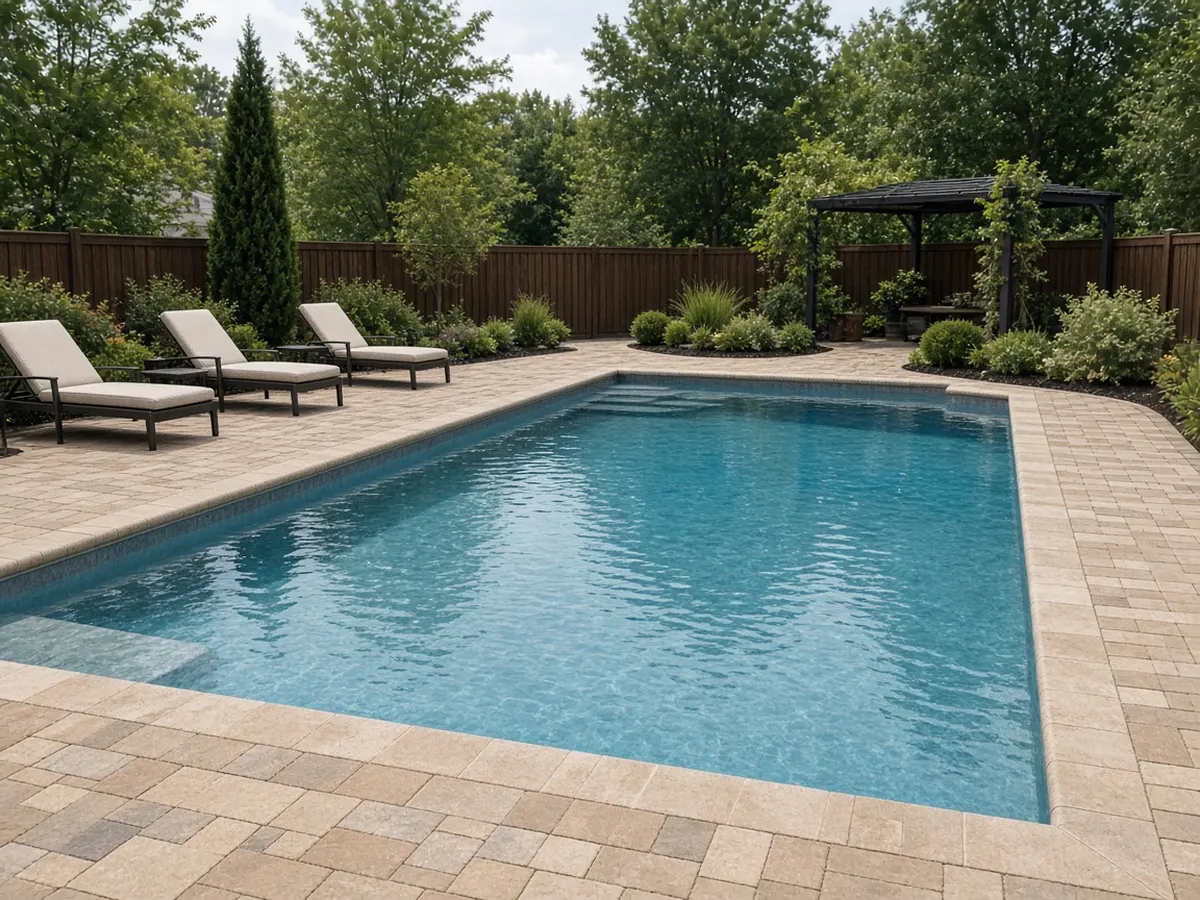
This page covers paver pool deck design, materials, drainage, safety, published costs and what to ask. When you are ready, call or use the form and we will connect you with an independent local contractor.
Why Pavers Around a Pool
- Traction. Many paver textures offer good slip resistance when wet.
- No large cracks. The joints between pavers let the surface flex instead of cracking.
- Repairable. If a section settles or a pipe under the deck needs work, pavers can be lifted and reset.
- Looks. Pavers come in many colors and styles and can match a patio and walk elsewhere in the yard.
New Pools vs. Replacing an Old Deck
New pools. The ground around a newly built pool has been heavily disturbed. Backfill around the pool shell can settle for some time. Your pool builder and paving contractor need to coordinate on compaction and timing. Some installers recommend extra base work or waiting for settlement before installing pavers.
Replacing an old concrete deck. Many older pools in Macomb County have cracked or heaved concrete decks. Tear-out, disposal and protecting the pool during demolition are part of the job. Sometimes pavers can be installed over sound concrete with an overlay system, but only if the concrete is stable and drains well.
Coping
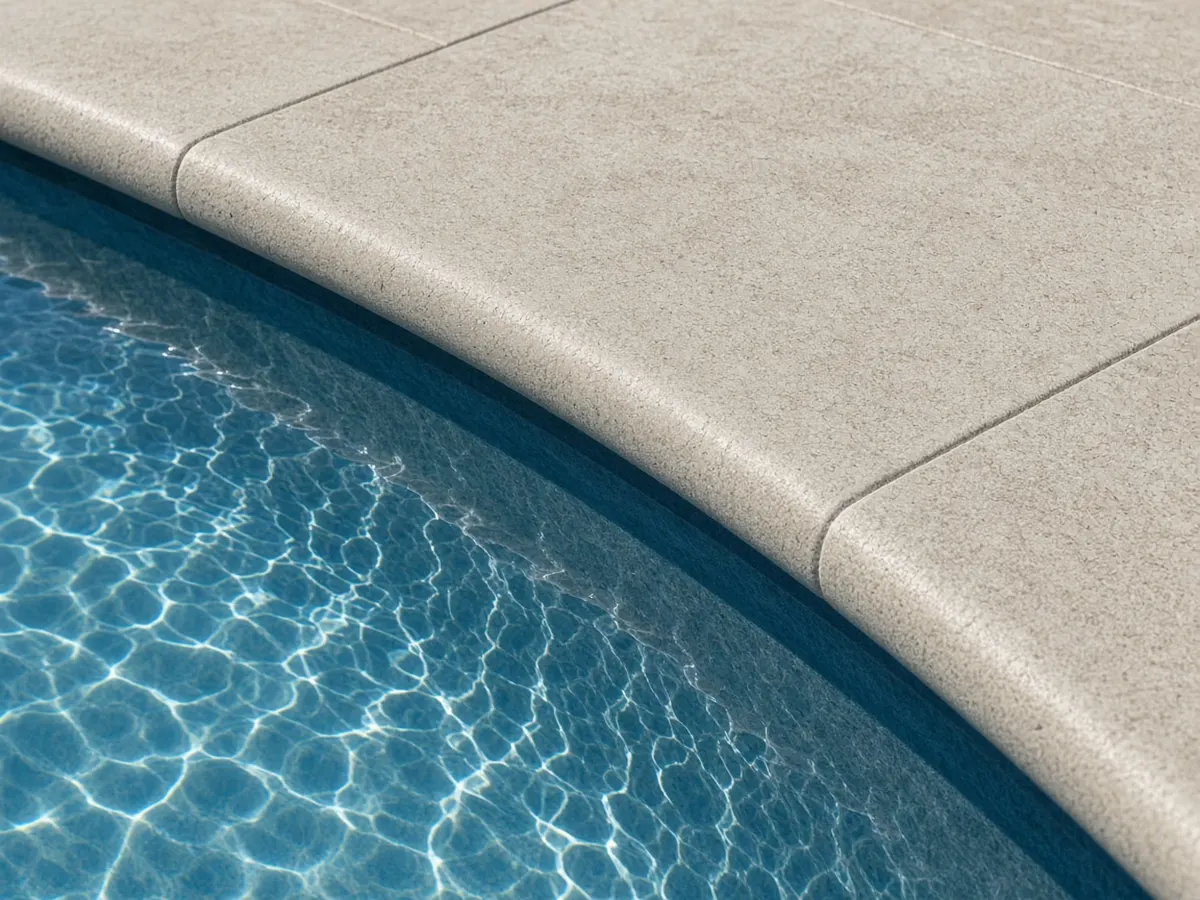
Coping is the edge cap right at the pool wall. Options include paver bullnose coping, natural stone, or poured concrete coping. The coping must be compatible with the pool type (gunite, vinyl liner, fiberglass), and with vinyl liner pools the coping and liner track need to work together. Coordinate coping choices with your pool professional.
Heat and Color
Dark pavers in full sun can get uncomfortably hot under bare feet. Lighter colors, such as tans, light grays and creams, stay cooler. Natural stone like travertine is known for staying relatively cool. Ask to see samples and look at them in the sun.
Drainage and Slope
Pool decks should slope away from the pool so splash water, rain and anything on the deck do not wash into the water. A common slope is about 1/8 to 1/4 inch per foot. On flat clay lots, deck drains or a drain line along the outer edge may be needed. Water draining toward the house is a problem, so the whole yard's drainage needs to be considered.
Base and Freeze-Thaw
The same rules as any patio apply, with a little extra caution:
- Excavate to firm subgrade, compact, and use geotextile fabric over clay.
- Install a compacted crushed stone base in lifts.
- Use solid edge restraint at the outer edge.
- Fill joints properly so water does not wash out the bedding sand.
Freeze-thaw cycles over the winter are hard on anything that holds water. A deck with good base drainage and full joints holds up much better.
Pool Chemicals and Salt Water
Chlorine splash and salt water pools can be hard on some materials. Ask whether the pavers or stone you are considering are suitable for pool use, and whether the manufacturer recommends a sealer for salt water pools. Rinse the deck regularly to remove chemical residue.
Safety and Codes
Pools are subject to safety rules, including fencing, gates and barriers. Changing a deck can affect fence and gate locations. Check with your building department before making changes, and confirm that any fence or barrier still meets requirements after the work.
Other safety considerations:
- Slip-resistant textures, especially near steps and the diving end.
- No trip edges between pavers and coping.
- Good lighting for evening swims.
Design Ideas
- Contrasting coping frames the pool.
- Wider deck areas for loungers on the sunny side.
- Connection to a patio for dining, a grill or a fire pit, with a step or seat wall between them.
- Planting beds set back far enough to keep debris out of the water.
What a Pool Deck Costs
These are general national estimates, not quotes. HomeGuide's pool deck cost guide lists paver pool decks at roughly $25 to $50 per square foot, or about $5,000 to $20,000 for typical projects depending on size and materials.
What moves the price:
- Removal of an old concrete deck.
- Coping type.
- Deck size and shape.
- Paver or stone choice.
- Drainage work.
- Access for equipment around the pool and through the yard.
Questions to Ask a Pool Deck Contractor
- Have you built paver decks around pools like mine (vinyl, gunite or fiberglass)?
- How will you protect the pool during work?
- How will the deck slope and drain?
- What coping do you recommend?
- What pavers stay cooler in the sun?
- How will you handle settlement around a new pool?
- What warranty do you give?
Closing the Pool for Winter
Michigan pool owners close their pools every fall, and the deck is part of that routine. Before the cover goes on, sweep off leaves and debris so they do not stain pavers over the winter. Check that cover water bags or anchors will not chip coping or pavers. Keep snowmelt from the cover draining toward the house. In spring, look closely at the coping and deck edges for any pavers that lifted or settled, and refill joints that washed out. Small fixes in spring keep the deck safe for the season.
Maintaining a Paver Pool Deck
Rinse chemical residue, keep joints full, and clean and seal as recommended. Before winter, make sure water is not pooling on the deck. In spring, check for any settled areas and fix them early; see paver repair and releveling.
Get a Free Pool Deck Quote
Tell us about your pool, whether there is an old deck to remove, roughly how much deck you want, and your city or zip code. A local contractor will follow up with a visit and a written quote. Call the number at the top of the page or use the form.