A paver driveway is the biggest and most demanding paving project most homeowners take on. It carries the weight of cars and trucks every day, gets scraped by snow shovels and plow blades, soaks in road salt for months each winter, and sits on ground that freezes and thaws over and over. When it is built well, a paver driveway can outlast poured concrete and asphalt and can be repaired one section at a time. When it is built like a patio, it fails fast.
This page explains what makes a driveway different, the choices to make, published cost ranges, and questions to ask. When you are ready, call or use the form and we will connect you with an independent local paving contractor.
Why Choose Pavers for a Driveway
Homeowners in Chesterfield Township usually consider pavers because of looks: a paver driveway transforms the front of a house. But there are practical reasons too.
- Repairability. If a section sinks or a utility line needs digging, pavers can be lifted and reset. A cracked concrete slab usually has to be cut out and replaced.
- Flexibility. Pavers move slightly as a unit instead of cracking, which suits freeze-thaw climates.
- Durability. Quality concrete pavers are very dense and strong. HomeGuide's driveway paver guide estimates a paver driveway can last roughly 25 to 75 years versus about 20 to 30 years for concrete, with proper installation and maintenance.
The trade-offs are higher upfront cost and the need for occasional joint maintenance.
What Makes a Driveway Base Different
A driveway is not a big patio. The base must carry concentrated wheel loads, including the occasional delivery truck, without rutting.
- Deeper excavation. A common guideline is roughly 8 to 12 inches of compacted crushed stone base for a residential driveway, plus bedding sand and paver thickness. Soft or wet clay may call for more.
- Geotextile fabric over the clay subgrade is especially important under a driveway.
- Compaction in lifts. The base should be placed in layers and compacted with a heavy plate compactor after each layer, not dumped all at once.
- Solid edge restraint. The edges of a driveway take the most stress. Many installers use a concrete curb or a heavy-duty edge restraint system, sometimes with a concrete haunch along the edge.
Ask every contractor how deep they will dig and how many inches of compacted base they will install. A driveway quote that does not specify base depth is hard to compare.
Paver Thickness and Pattern
For driveways, pavers around 80 mm (about 3 1/8 inches) thick are a common choice, compared with about 60 mm for patios. Thicker pavers resist cracking and tipping under tires.
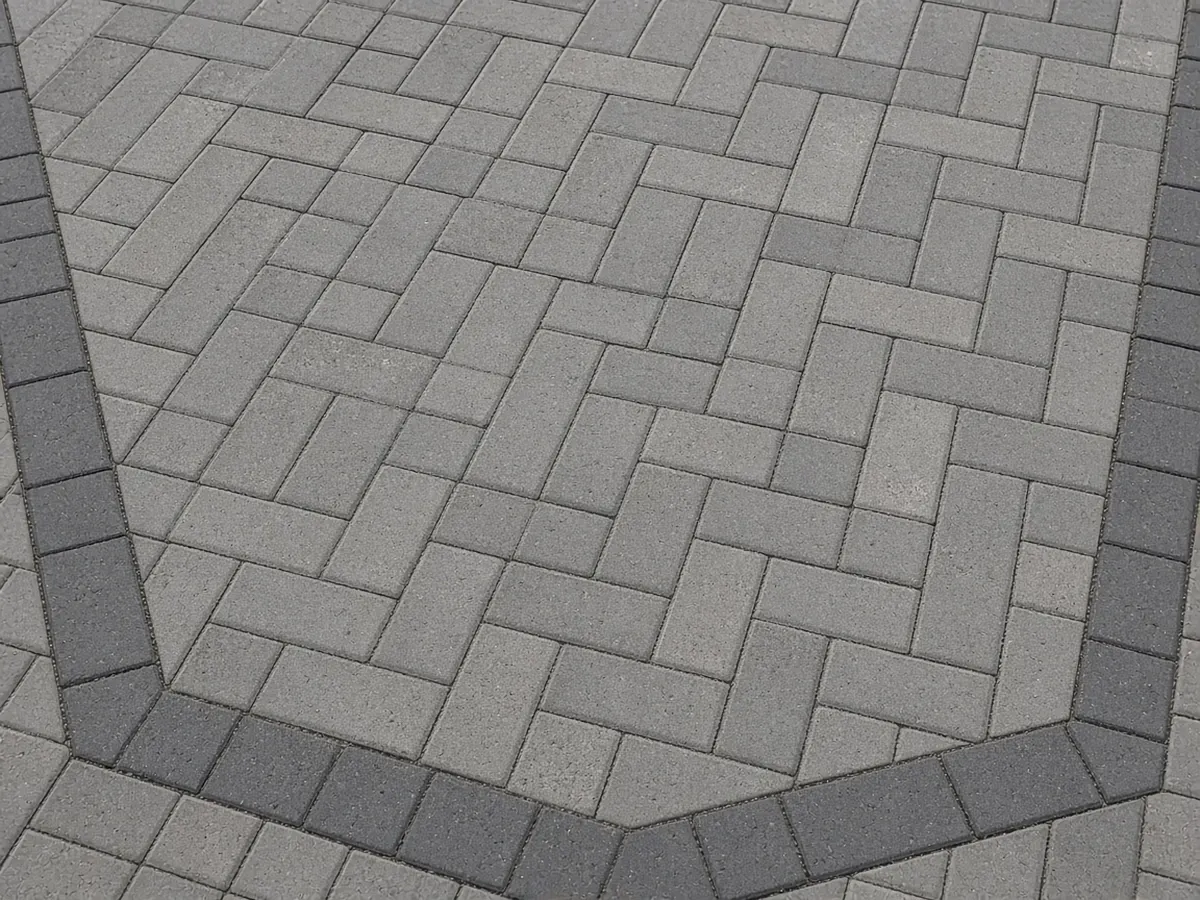
Pattern matters more on a driveway than anywhere else. Tires turning and braking push pavers sideways. Herringbone patterns, especially laid at 45 or 90 degrees to the direction of travel, interlock best and resist creep. Running bond laid parallel to traffic is generally weaker for driveways. Ask your contractor which pattern they recommend for your layout and why.
Snowplows, Shovels and Salt
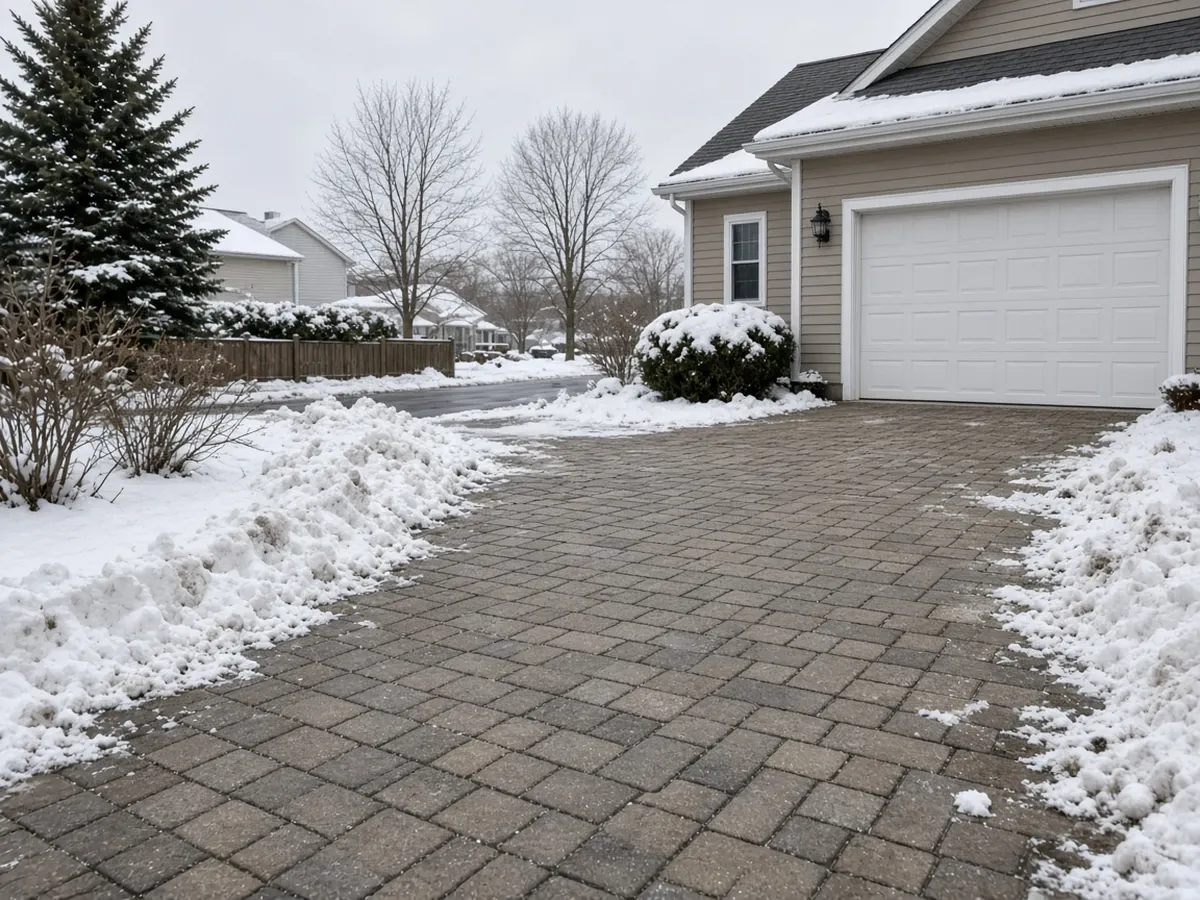
Michigan winters are the real test of a paver driveway.
Plows and blowers. Pavers with chamfered (beveled) edges are less likely to catch a blade. If you use a plow service, ask them to raise the blade slightly or use a rubber or poly cutting edge. Snow blowers with skid shoes set slightly high are gentler.
Salt. Quality concrete pavers are made to resist deicing salt, but repeated salt exposure can wear surfaces over time. Use salt sparingly, sweep up excess in spring, and consider sealing. Some homeowners use calcium magnesium acetate or sand for traction. Ask your paver supplier which products the manufacturer recommends.
Ice and drainage. A driveway should slope so water drains to the street or a drain, not toward the garage or house. Standing water that freezes becomes a slip hazard and works into joints.
Design Choices
- Full driveway in one color or a blend.
- Border and field: a contrasting soldier course border with a field of another color.
- Apron only: pavers at the street end or near the garage, with concrete or asphalt elsewhere, as a lower-cost upgrade.
- Ribbons or bands of pavers inside concrete.
- Parking pads beside an existing driveway for an extra car or a trailer.
Before you choose, check your HOA rules and any requirements from the township or road agency for the section that meets the street. The apron area between the sidewalk and the road may be in the public right-of-way.
Removing the Old Driveway
Most paver driveways replace an existing concrete or asphalt driveway. Tear-out and disposal are a meaningful part of the cost. Ask whether removal is included in the quote, how the old material will be disposed of, and how they will protect your lawn and sidewalk during the work. Expect the driveway to be out of service for some days while work is done.
What a Paver Driveway Costs
These are general national estimates, not quotes. HomeGuide lists paver driveways at roughly $10 to $30 per square foot, with typical totals around $5,700 to $17,200, and high-end brick or natural stone driveways around $15,000 to $30,000 or more.
What moves the price:
- Size and shape. Curves, circles and multiple patterns mean more cuts.
- Removal of existing concrete or asphalt.
- Base depth and the condition of the soil.
- Paver type, thickness and brand.
- Drainage work such as trench drains at the garage.
Comparing a paver driveway with concrete on price alone misses the repairability and lifespan. Get written quotes that list base depth, paver product, thickness, pattern and edge restraint so you are comparing the same thing.
Questions to Ask a Driveway Contractor
- How deep will you excavate, and how many inches of compacted base will you install?
- What paver and thickness will you use?
- What pattern do you recommend for our layout?
- What edge restraint will you use, and how?
- Is removal and disposal of the old driveway included?
- Who handles any permits or right-of-way approval?
- What does your warranty cover if the driveway ruts or settles?
- Can I see driveways you built several years ago?
Caring for a Paver Driveway
Keep joints full, pull weeds early, clean oil spots promptly, and go easy on salt. Many owners clean and seal every few years. If a section settles, a contractor can lift, re-base and reset it; see paver repair and releveling.
Get a Free Driveway Quote
Tell us the rough size of your driveway, whether there is an existing driveway to remove, and your city or zip code. A local paving contractor will follow up to measure and give you a written quote. Call the number at the top of the page or use the form.