One of the best things about pavers is that they can be fixed. When a section of a poured concrete patio cracks or sinks, the usual answer is to cut it out or tear it out. When a section of pavers dips, heaves or starts rocking, a contractor can usually lift the pavers, fix what went wrong underneath and set the same pavers back down. Done well, the repaired area blends in with the rest.
This page explains why pavers move in Southeast Michigan, what a proper repair involves, when repair is not enough, and what to ask. When you are ready, call or use the form and we will connect you with an independent local paving contractor.
Common Problems
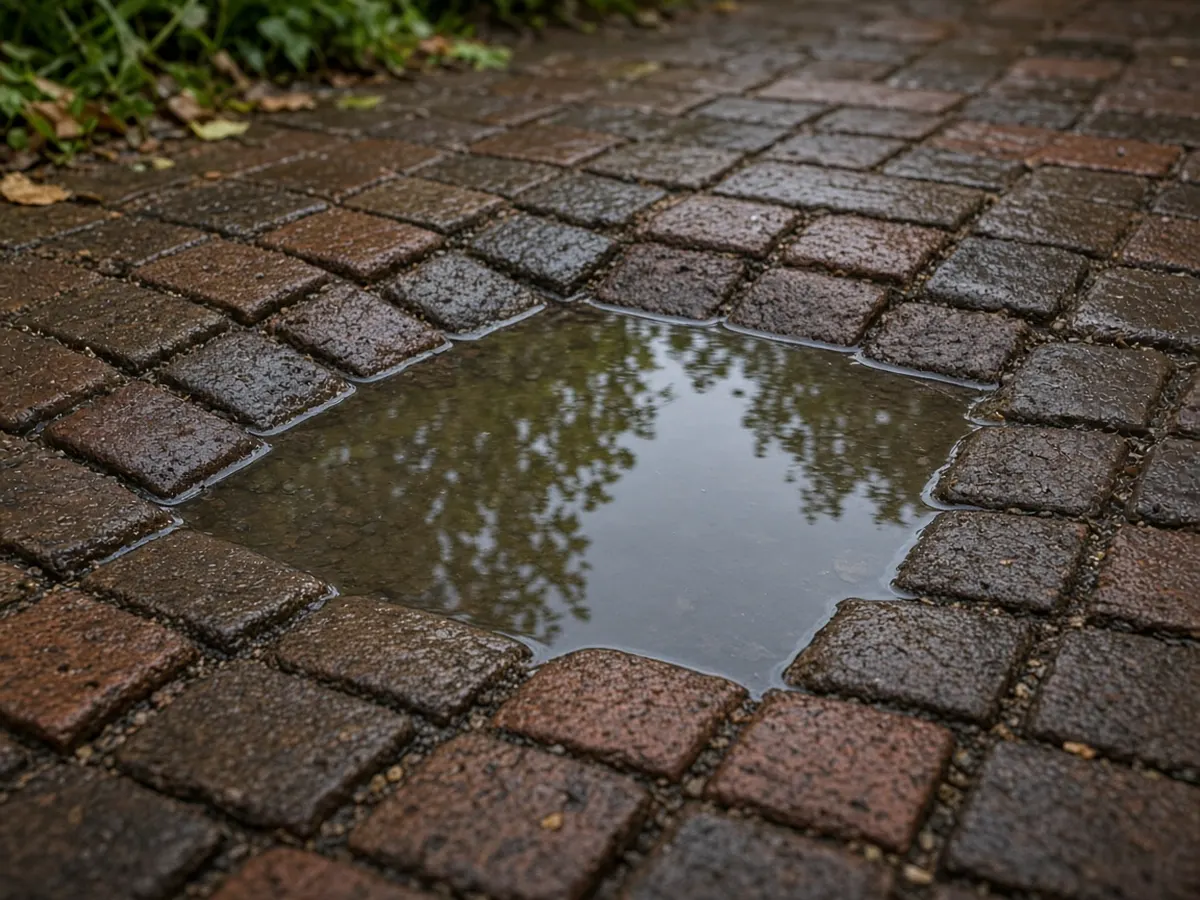
- Sunken areas where water puddles after rain.
- Heaved or raised pavers, often near tree roots or after hard winters.
- Rocking pavers that move underfoot.
- Separating joints where pavers have drifted apart, usually at the edges.
- Edge failure where the border has pushed outward and pavers have fallen off the edge.
- Cracked or chipped pavers.
- Low spots near downspouts or at the house.
Why Pavers Move Here
Freeze-thaw and frost heave. Water in the base or subgrade freezes and expands, lifting pavers, then thaws and lets them settle. Repeat that for several winters and the surface goes wavy, especially where the base is thin or holds water.
Clay subgrade. Chesterfield Township and much of north Macomb County sit on dense clay. When base stone sits directly on wet clay without fabric, the clay slowly mixes into the stone and the base loses strength.
Thin or poorly compacted base. The most common cause of failure. If the base was dumped in one thick layer and compacted once, or if there simply was not enough, the pavers will settle.
Missing edge restraint. Without a solid edge, pavers creep outward, joints open, and sand washes out.
Washed-out joints. Jointing sand keeps pavers locked together. When it washes out, pavers can shift and weeds move in. See polymeric sand and joint repair.
Water concentration. Downspouts, sump discharge lines or roof valleys that dump water in one spot erode bedding sand and base.
Tree roots. Roots under a walk or patio can lift pavers as they grow.
Settling over backfill. Areas next to a house foundation, or over a filled utility trench, often settle because the soil was loose to begin with.
How a Proper Repair Works
- Find the cause. A good contractor looks at why the area moved before fixing it. Resetting pavers on the same failed base just delays the problem.
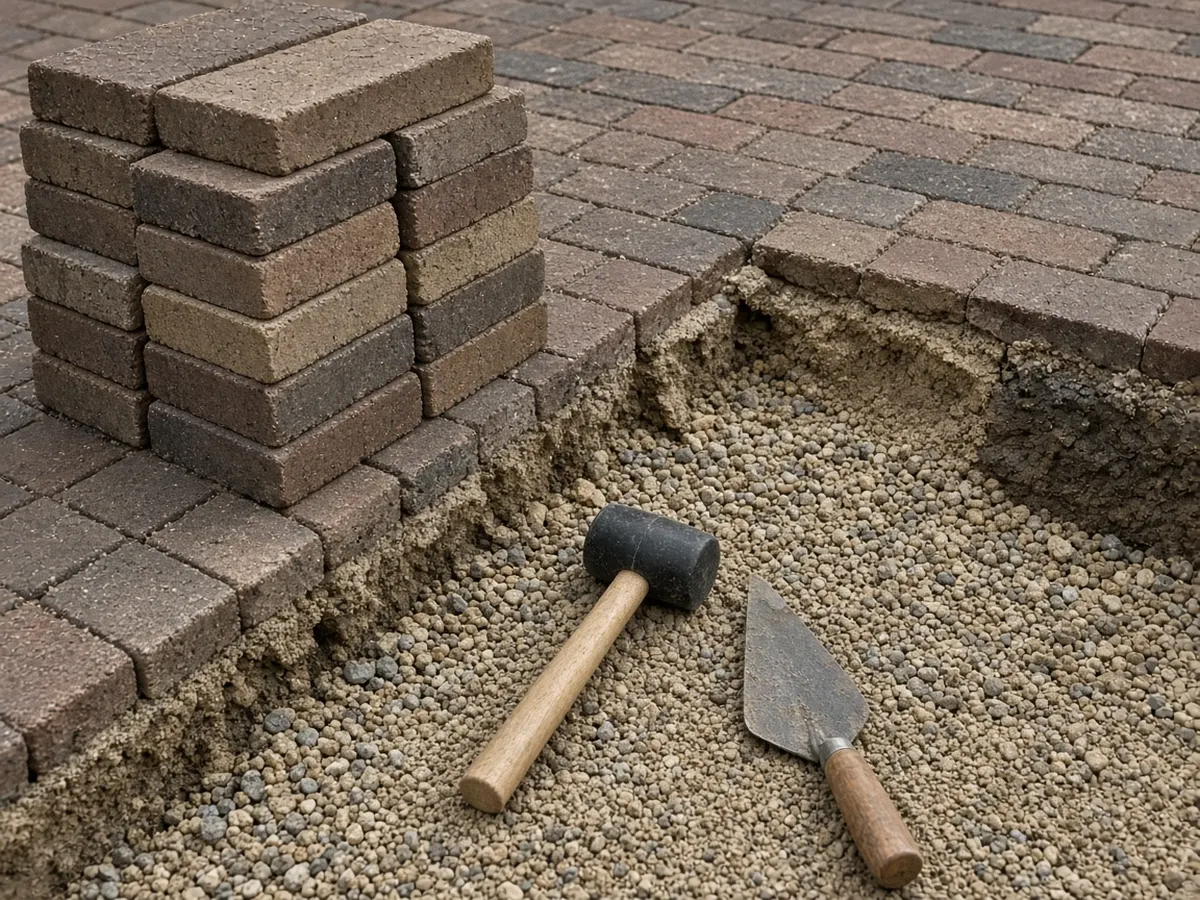
- Remove pavers from the affected area and a little beyond, stacking them in order if the pattern matters.
- Remove the bedding sand and inspect the base. If it is wet, thin, or mixed with clay, it is dug out.
- Fix the base. Add and compact crushed stone in lifts, adding fabric over clay if needed, until the base is at the correct grade.
- New bedding sand screeded to match surrounding levels.
- Reset pavers, replacing any broken ones.
- Fix edges with new or reset edge restraint if that was the issue.
- Compact and re-sand joints, often with polymeric sand.
- Fix the water source by extending downspouts or adding drainage if water caused the problem.
Repair or Replace?
Releveling makes sense when the problem is limited to areas of the surface and the rest is sound. Full replacement may make more sense when:
- Most of the surface is wavy or sinking.
- The base was clearly built far too thin everywhere.
- You want a different layout, size or paver anyway.
- The pavers are badly worn, spalled or discontinued and you cannot match them.
A contractor can often lift a test section to see what the base looks like before you decide. Ask them to show you.
Matching Pavers
If pavers are broken, you will need replacements. Many homeowners keep a few spares left over from installation, so check the garage or shed. If not, the contractor can try to match the product. Older or discontinued pavers can be hard to find, and new pavers may look brighter than weathered ones at first. One trick is to take good pavers from a less visible spot, such as under a grill, and use the new ones there.
What About Mudjacking or Foam?
Mudjacking and foam injection lift solid concrete slabs by pumping material underneath. HomeGuide's mudjacking guide lists that service at roughly $4 to $9 per square foot, but it is a concrete slab repair. Individual pavers are not slabs, so for pavers the usual method is lifting, re-basing and resetting by hand.
What Repair Costs
There is no reliable published average for paver releveling because jobs vary widely: a few rocking pavers by the door versus a sunken third of a driveway. Price depends on area, how deep the base problem goes, whether pavers need replacing, access and whether drainage work is included. Some contractors have a minimum charge for small jobs. The way to know is to have someone look and give a written quote.
If you are also thinking about cleaning and sealing, doing it right after a repair can help blend the repaired area. HomeGuide's paver sealing guide notes that releveling and repairs are typically priced separately from sealing.
Questions to Ask a Repair Contractor
- What do you think caused the movement?
- Will you inspect and rebuild the base, or only reset pavers on new sand?
- Will you add fabric over clay if needed?
- How will you fix the edges?
- Do you need to address drainage to prevent this again?
- Do you warranty the repair?
When to Call
Small problems become big ones. Rocking pavers and open joints let water into the base, which speeds up settling, and trip hazards on a front walk are a real safety issue, especially in winter. Fall is a good time to fix things before freeze-thaw season, and spring is a good time to repair winter damage.
Get a Free Repair Quote
Tell us what is happening (sinking, heaving, rocking, edges spreading), roughly how big the area is, and your city or zip code. A local paving contractor will follow up to look at it and give you a written quote. Call the number at the top of the page or use the form.