A paver patio or driveway can last for decades in Michigan, or it can start rocking, sinking and sprouting weeds after two winters. Most of the difference is underground. The pavers you see are the last inch or two of a system that starts with digging out soft topsoil, putting down compacted crushed stone, screeding a thin layer of bedding sand, and locking the edges so nothing can creep. In Chesterfield Township, where much of the ground is heavy lake-plain clay that holds water and heaves when it freezes, that hidden work matters more than the brand or color of the paver.
Chesterfield Brick Paving is a referral service. We help homeowners in Chesterfield Township, New Baltimore and north Macomb County plan paving projects and get connected with independent local paver and hardscape contractors. Tell us what you want, whether that is a new backyard patio, a paver driveway, a front walk, or fixing a section that has sunk, and we pass your request to a local pro who does that kind of work. They contact you, look at the site, and give you a written quote before any work starts. Use the form on this page or call the number at the top of the screen.
Paving Services for Chesterfield Township Homes
These are the projects homeowners ask about most. Each service page goes into detail on materials, base depth, drainage, typical cost ranges from published guides, and what to ask a contractor.
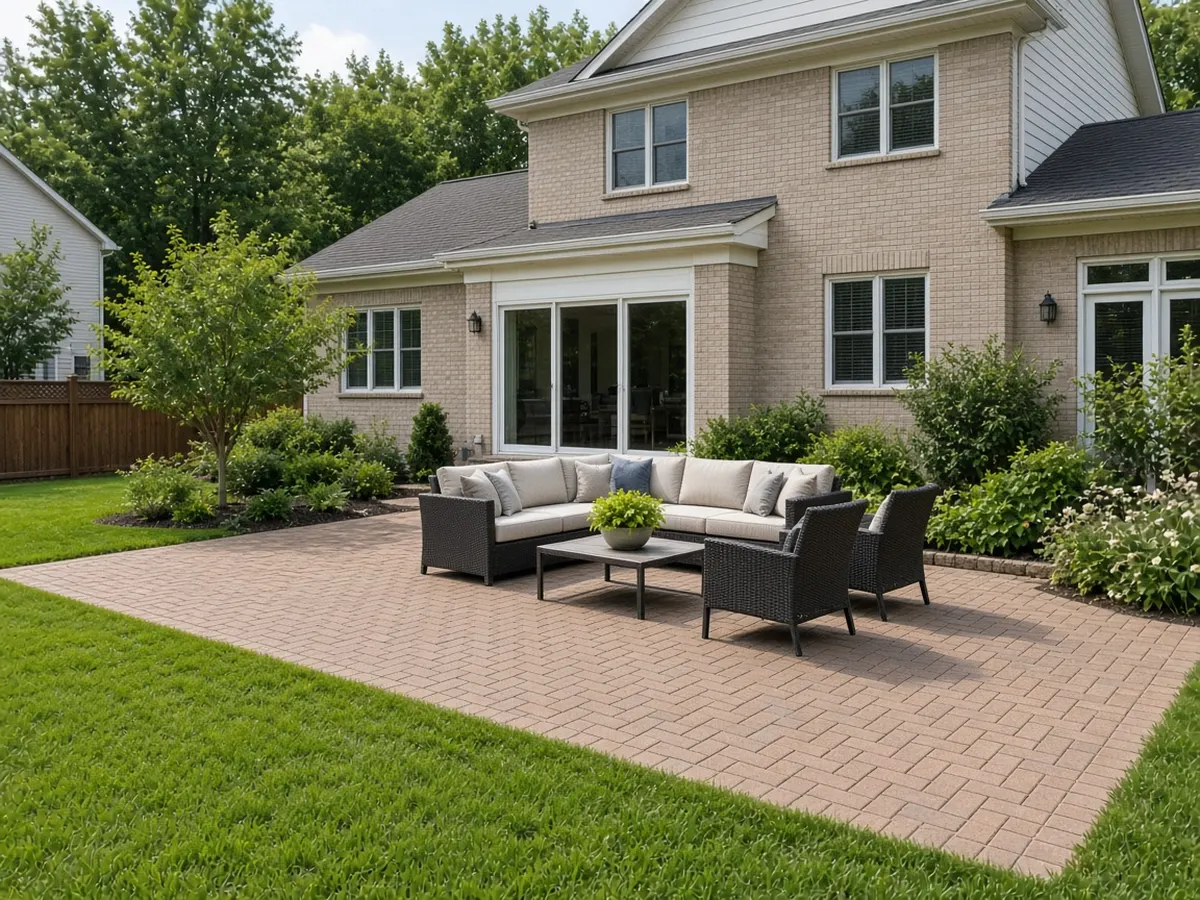
- Brick paver patios: backyard patios, dining and lounge areas, and patio extensions.
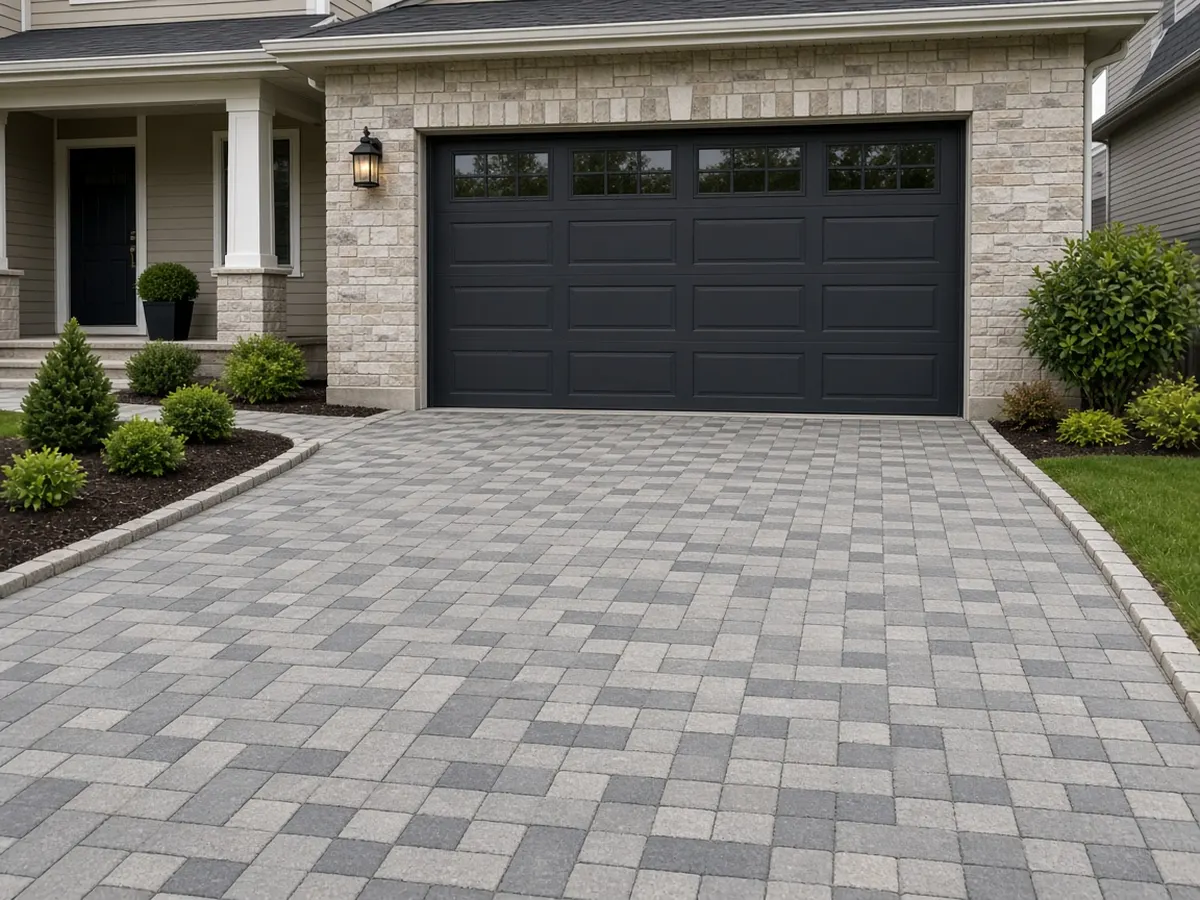
- Paver driveways: full driveways, aprons, borders and parking pads built for car and snowplow loads.
- Walkways and sidewalks: front entry walks, side-yard paths and garden walkways.
- Paver repair and releveling: lifting and resetting sunken, heaved or rocking pavers.
- Paver sealing and cleaning: washing, stain removal, re-sanding and sealer.
- Polymeric sand and joint repair: fixing washed-out joints, weeds and ants.
- Retaining walls and seat walls: segmental block walls, raised beds and patio seating.
- Paver steps and porches: entry steps, landings and porch overlays.
- Pool decks: paver decks and coping around in-ground pools.
- Fire pits and outdoor living: fire pits, grill areas and patio features.
- Permeable pavers: systems that let rainwater soak in instead of running off.
Why Paving Is Different in Southeast Michigan
Paver guides written for Texas or California are not much help here. Three local conditions shape almost every paving job in Chesterfield Township.
Freeze-thaw cycles. Southeast Michigan swings above and below freezing many times each winter. Water that gets into the base or the joints freezes, expands, thaws and moves fines around. Over several seasons that is what turns a flat patio into a wavy one. The fix is not a better paver. It is a base that drains, joints that stay full, and enough slope that water leaves the surface instead of sitting on it.
Clay soils. Much of Chesterfield Township and New Baltimore sits on the old lake plain of Lake St. Clair, where the native soil is dense clay. Clay drains slowly, stays wet, and swells when it freezes. A contractor working on clay should dig out the topsoil and soft material, compact the subgrade, and often add a layer of geotextile fabric so the crushed stone base does not slowly push down into the mud. On wet sites, some installers add a deeper base or a drain line along the low edge.
Frost heave and snowplows. Driveways here take more abuse than in warm states: snowplow blades, salt, heavy vehicles, and ice. A driveway needs a thicker base than a patio, a sturdier paver (usually 80 mm, about 3 1/8 inches, rather than 60 mm), and a pattern such as herringbone that resists the twisting forces of tires. Edges need solid restraint so pavers cannot drift outward over time.
What a Good Paver Installation Looks Like
You do not need to become a hardscaper to hire one well. It helps to know the basic steps so you can ask good questions and compare quotes.
- Call MISS DIG 811 before digging. Michigan law requires excavators to call MISS DIG 811 at least three business days before digging so buried utility lines can be marked. Your contractor normally handles this, but it is worth confirming.
- Excavation. The crew removes sod, topsoil and soft material down to firm subgrade. Depth depends on the use: a common guideline is roughly 4 to 6 inches of compacted base for patios and walkways and 8 to 12 inches for driveways, more on poor clay. Add the paver thickness and bedding sand to that.
- Grading for drainage. The finished surface should slope away from your house, commonly about 1/8 to 1/4 inch per foot, so rain and snowmelt do not pond against the foundation.
- Fabric and base. On clay, geotextile fabric separates the soil from the stone. The base is crushed angular stone (often called 21AA or road gravel in Michigan) placed in lifts of a few inches and compacted with a plate compactor after each lift.
- Bedding layer. About an inch of coarse concrete sand or fine chip is screeded flat over the base. This is not a leveling layer to hide a bumpy base; the base itself should already be at the right grade.
- Laying pavers. Pavers go down in the chosen pattern, with cuts made using a saw. A soldier course border is common for both looks and stability.
- Edge restraint. Plastic or aluminum edging spiked into the base, or a concrete curb, keeps the field from spreading.
- Compaction and joint sand. The surface is compacted to seat the pavers, then joints are filled with sand or polymeric sand and compacted again.
When a quote is far cheaper than others, the savings usually come from step 2 or 4: less digging, less stone, less compaction. That is invisible on day one and very visible after two winters.
Brick Pavers vs. Concrete Pavers
People say "brick pavers" for almost any paver. Strictly, clay brick pavers are fired clay, like a traditional brick, while concrete pavers are cast concrete in molds. Both are common in Macomb County.
Clay brick pavers keep their color for a very long time because the color goes all the way through the fired clay. They have a classic look that suits older homes and traditional styles. The choice of shapes and sizes is narrower, and they can cost more.
Concrete pavers come in a huge range of shapes, sizes, colors and textures, including large slabs and stone-look finishes. Their surface color can fade slowly over many years as the top wears, and sealing can help. They are widely stocked by local suppliers.
Either can be durable in Michigan if it is rated for freeze-thaw exposure and installed on a proper base. Ask the contractor what product and thickness they plan to use and why.
What Paving Costs: General Estimates
Every site is different, so the only real price is a written quote. To give you a starting point, here are published national estimates. These are not quotes and not our prices; Chesterfield Township prices depend on access, soil, size, materials and the contractor.
- Patios: HomeGuide lists paver patio installation at roughly $10 to $17 per square foot, or about $3,800 to $6,800 for a 20 by 20 foot patio.
- Driveways: HomeGuide's driveway paver cost guide lists roughly $10 to $30 per square foot, with typical totals around $5,700 to $17,200.
- Walkways: HomeGuide's paver walkway guide lists roughly $15 to $40 per square foot.
- Sealing: HomeGuide's paver sealing guide lists about $1.50 to $3.25 per square foot, including cleaning and re-sanding.
- Retaining walls: HomeGuide's retaining wall guide lists segmental block walls at roughly $35 to $65 per square foot of wall face.
Prices for repair and releveling vary too much from job to job for a meaningful published average. A contractor needs to see how large the area is and why it moved.
How Our Referral Service Works
We keep it simple.
- You tell us about the project. Call or use the form. A few sentences are enough: what you want built or fixed, rough size, and your city or zip code. Photos help if the contractor asks for them later.
- We pass it to a local pro. Your request goes to an independent paving or hardscape contractor who serves your area and handles that kind of work.
- They contact you and quote. The contractor schedules a visit, measures, checks the soil and drainage, and gives you a written quote. You decide whether to hire them.
There is no charge to you for the referral. We do not do the work ourselves, we are not a contractor, and the contractor you hire is responsible for their work, warranty, insurance and any permits. We encourage you to get more than one quote for larger projects and to check references.
Questions to Ask Any Paving Contractor
- How deep will you excavate, and how many inches of compacted base will you install?
- Will you use geotextile fabric on my clay soil?
- What paver will you use, what thickness, and is it rated for freeze-thaw?
- What edge restraint will you use?
- How will the surface drain, and how much slope will it have?
- Will you use regular sand or polymeric sand in the joints?
- Does the job need a permit in my township or city, and who pulls it?
- What does your warranty cover, and for how long?
- Can you show me photos or addresses of similar jobs that are a few years old?
Projects a few years old are the real test. Any patio looks good the week it is finished.
Service Area
Contractors we work with serve Chesterfield Township (zip codes 48047 and 48051), New Baltimore, Lenox Township, Macomb Township, Washington Township, Harrison Township, Ray Township and nearby north Macomb County communities. See the service areas page for notes on each community, or just call and ask.
Planning Tips Before You Call
A little planning makes the first visit more productive.
- Measure roughly. Length times width gives square footage. Even a ballpark helps the contractor think about materials.
- Think about use. A patio for a grill and four chairs is very different from one for a sectional, a dining table and a fire pit. Lay out a garden hose or a tarp to see the size on the ground.
- Watch where water goes. After a heavy rain, note where water collects. Low spots and downspouts near the project area matter.
- Check your HOA. Many Chesterfield Township and Macomb Township subdivisions have homeowners associations with rules on driveways and hardscape. Ask before you commit to a design.
- Timing. Paving season in Michigan generally runs from spring thaw into late fall, depending on weather. Contractors often book up for late spring and early summer, so asking early helps.
Ready to Talk About Your Project?
Whether you are picturing a new patio for next summer or you are tired of tripping over a sunken section of your front walk, the next step is the same: tell us about it. Call the number at the top of the page or fill out the quick quote form, and a local paving contractor will follow up to talk through your project and schedule a free estimate.