Pavers do not need much care, but after a few Michigan seasons most patios and driveways look tired. Colors fade, moss grows in shady corners, oil drips mark the driveway, white haze appears on new pavers, and joint sand washes out. Professional cleaning, re-sanding and sealing can bring back much of the original look and help keep joints intact.
This page explains what cleaning and sealing involve, the different sealer types, when sealing is worth it, published costs and questions to ask. When you are ready, call or use the form and we will connect you with an independent local contractor.
What Professional Cleaning Involves
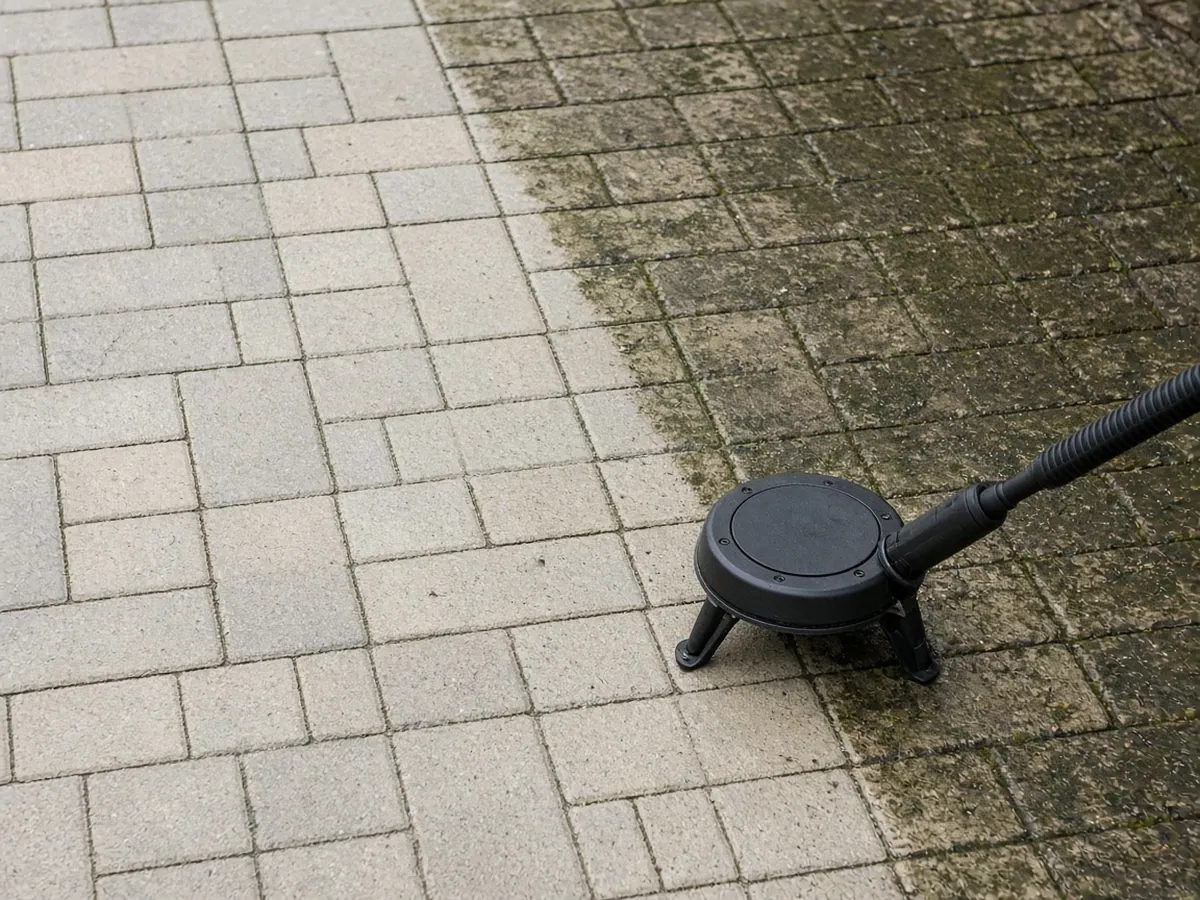
- Surface washing with a surface cleaner attachment on a pressure washer. A good surface cleaner spins jets inside a hood, cleaning evenly without carving lines into the pavers or blasting out all of the joint sand in an uncontrolled way.
- Pre-treating stains such as oil, rust, leaves, algae and moss with appropriate cleaners.
- Efflorescence removal where needed (see below).
- Joint cleanout. Washing removes old sand from the joints along with weeds and dirt.
- Drying. Pavers must dry before re-sanding and sealing.
- Re-sanding. Joints are refilled with jointing sand or polymeric sand.
Aggressive pressure washing with a narrow tip can etch the paver surface and expose aggregate. Ask how the contractor washes pavers.
Efflorescence
New concrete pavers often develop a white chalky haze within the first months. This is efflorescence: natural salts in the concrete carried to the surface by moisture. It is not a defect and often fades on its own over time. Sealing over active efflorescence can trap it under the sealer, so many manufacturers recommend waiting before sealing new pavers. Specialty efflorescence cleaners exist, and a contractor can advise whether to use one.
Why Seal Pavers
Sealing is optional, not required, but it can help in several ways.
- Color enhancement. Many sealers deepen color, with a natural matte or a "wet look."
- Stain resistance. Oil, food and leaf tannins are easier to clean off.
- Joint stabilization. Some sealers help bind joint sand, reducing washout and weeds.
- Salt and freeze-thaw protection. Sealers can reduce water absorption, which may help in a climate with lots of freeze-thaw cycles and road salt. Check what the paver manufacturer recommends.
Sealing will not fix a failing base, sunken areas or broken pavers. If you have those problems, fix them first; see paver repair and releveling.
Types of Sealers
- Penetrating sealers soak into the paver and do not leave a visible film. They give a natural look and good breathability.
- Film-forming acrylic sealers leave a thin coating that enhances color and can add sheen. They can wear on driveways and may need periodic recoating.
- Water-based vs. solvent-based. Water-based products are lower odor and generally easier to work with; solvent-based products can give a deeper color. Product choice depends on the pavers and the look you want.
A sealer that traps moisture can cloud or turn white. Sealing should be done on dry pavers in suitable weather, usually with no rain forecast and temperatures within the product's range. In Michigan that typically means late spring through early fall.
How Often to Seal
There is no single answer. It depends on the sealer, sun exposure, traffic and the look you want. Many owners reseal every few years. Driveways wear faster than patios. Ask the contractor what to expect from the product they recommend, and follow the paver manufacturer's guidance.
Driveway Stains
- Oil and fluids. Fresh spills come up more easily. Blot, apply an absorbent, then use a degreaser made for pavers. Older stains may need a specialty cleaner or replacing a few pavers.
- Rust from fertilizer or metal furniture needs a specific rust remover.
- Tire marks from hot tires on sealed surfaces can sometimes be cleaned with appropriate products.
Because pavers are individual units, a badly stained paver can be lifted and replaced, which is not possible with poured concrete.
Moss, Algae and Weeds
Shady, damp spots on the north side of a house or under trees grow moss and algae. Cleaning removes them, and better drainage and sunlight help keep them away. Weeds in joints mostly grow in windblown dirt on top of the sand, not up from below, so keeping joints full and sweeping debris helps. Polymeric sand reduces weeds; see polymeric sand and joint repair.
Best Time of Year in Michigan
Late spring through early fall is the usual window for cleaning and sealing in Southeast Michigan. Pavers need to be dry, nights should stay well above freezing while the sealer cures, and rain should stay away for the curing period the product calls for. Many homeowners like to clean in late spring to wash off winter salt and grime, or in early fall to protect the surface before freeze-thaw season starts. Avoid sealing right after a long rainy stretch, when the base and joints may still hold moisture.
What Cleaning and Sealing Cost
These are general national estimates, not quotes. HomeGuide's paver sealing guide lists professional paver sealing at roughly $1.50 to $3.25 per square foot, including washing and re-sanding. The guide notes that releveling and repairs cost extra.
What moves the price:
- Size of the area. Small jobs may have a minimum.
- Condition. Heavy stains, moss and efflorescence take more work.
- Sealer type.
- Polymeric sand vs. regular sand.
- Number of coats.
Doing It Yourself
Some homeowners clean and seal their own pavers. If you do, follow the sealer manufacturer's directions closely, use a surface cleaner rather than a narrow tip, let the pavers dry fully (often a day or more), and apply sealer thinly. Thick coats can trap moisture and turn cloudy or slippery. Test a small area first.
Questions to Ask a Sealing Contractor
- How will you clean the pavers without damaging them?
- Will you use regular or polymeric sand?
- What sealer do you recommend and why? Is it approved by the paver manufacturer?
- What look will it give: natural, enhanced or wet?
- How long until we can walk and drive on it?
- How long should it last?
Get a Free Cleaning and Sealing Quote
Tell us what surfaces you want cleaned and sealed, roughly how big they are, and your city or zip code. A local contractor will follow up with a written quote. Call the number at the top of the page or use the form.